In today's wave of digital transformation, businesses face many challenges and difficulties. Digital transformation is a complex, long-term undertaking. Businesses need advanced digital management to become more efficient and cut costs, yet technical and cost constraints hold them back and make them hesitate. To transform successfully, they need to understand both their own needs and the difficulties of implementation.

Why businesses are transforming
Technology: As new and frontier technologies advance, more and more digital technologies have matured. Many companies are actively developing and adopting digital strategies to cut costs, raise efficiency and improve the quality of their products and services.
Market: Many industries now have more supply than demand. Competition is white-hot, especially over speed of response, quality and cost. Using digital transformation to upgrade production, management and organization, raise overall performance and strengthen core competitiveness has become the inevitable choice for companies seeking to survive and grow in increasingly fierce markets.
Policy: With the rapid development of IT and rising expectations of service, the digital upgrading of businesses and industries has become an important direction for China's economy. In recent years the government has introduced a series of favorable policies — covering strategy, infrastructure, solutions, talent and funding, including tax and loan incentives — to encourage and ease digital transformation and advance the digitalization of industry.
Common pain points
Businesses share several pain points when planning digital transformation. First, with limited budgets and little assessment of the cost-effectiveness and long-term return of digital investment, the "big investment, long payback" nature of transformation lets budget concerns derail decisions and progress, causing plans to fail. Second, lacking relevant skills, internal resources and digital experience, businesses often struggle to transform on their own. Finally, many lack a clear understanding of their own needs, making transformation hard to advance or leaving them with digital products that don't meet their needs, wasting resources.
Common needs
Lightweight, easy-to-use applications: Light, easy-to-use digital tools and software meet functional needs while keeping deployment simple. This helps SMEs get past cost constraints, start transforming quickly, and lower the technical barrier and training costs along the way.
One-stop digital services: With weak digital foundations and capabilities, businesses tend to choose end-to-end transformation solutions, with full service from needs analysis to system training, to reduce potential risks. This gives them comprehensive support and guidance throughout and keeps the transformation on track.
Flexible and sustainable: Markets are complex and unpredictable, so businesses must adjust at any time to meet opportunities and challenges. Traditional digital products that are hard to edit often carry higher costs for later changes and maintenance. A digital product that can be managed and defined flexibly, and adjusted when processes and requirements change, is especially important. Businesses can choose products they can use sustainably over the long term — invest once, benefit for years.

tsan.ai's intelligent low-code technology
Traditional software development usually involves a great deal of coding and complex processes, bringing high costs, heavy workloads and long development cycles. At the same time, with rapid technological change and shifting markets, businesses' needs for software are becoming ever more varied. Low-code technology emerged in response.
tsan.ai's core technology, the tsanCenter intelligent low-code development platform, uses a dual-core model of low-code plus AI, combining the capability to run large group-level digital applications, integration of hybrid cloud and edge computing and fast, efficient, low-cost delivery to provide complete, smooth digital transformation services with clear advantages.
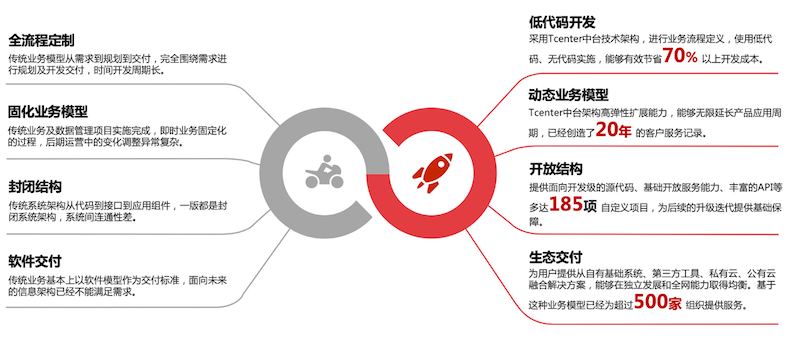
Lower development costs: A simpler development process and less code lower development costs, greatly lowering the barrier to digital transformation.
Highly elastic and flexible extension: Businesses can modify many functions themselves to adapt to business and organizational change; together with its open structure and ecosystem delivery, this supports sustainable long-term use.
No limits on industry or scenario: Unlike other standardized low-code SaaS workflow products, tsan.ai's low-code products are not limited — whether in manufacturing, retail, finance or healthcare, they can provide efficient digital solutions.
Handling complex workflows, data and forms: tsan.ai combines low-code with middle-platform and application technology, so whether a business faces large-scale production processes, complex sales operations or varied data collection needs, its low-code products can handle them.
Complete solutions and full-lifecycle service: From discussing requirements to delivering products and training, tsan.ai provides all-round service to keep digital transformation on track.
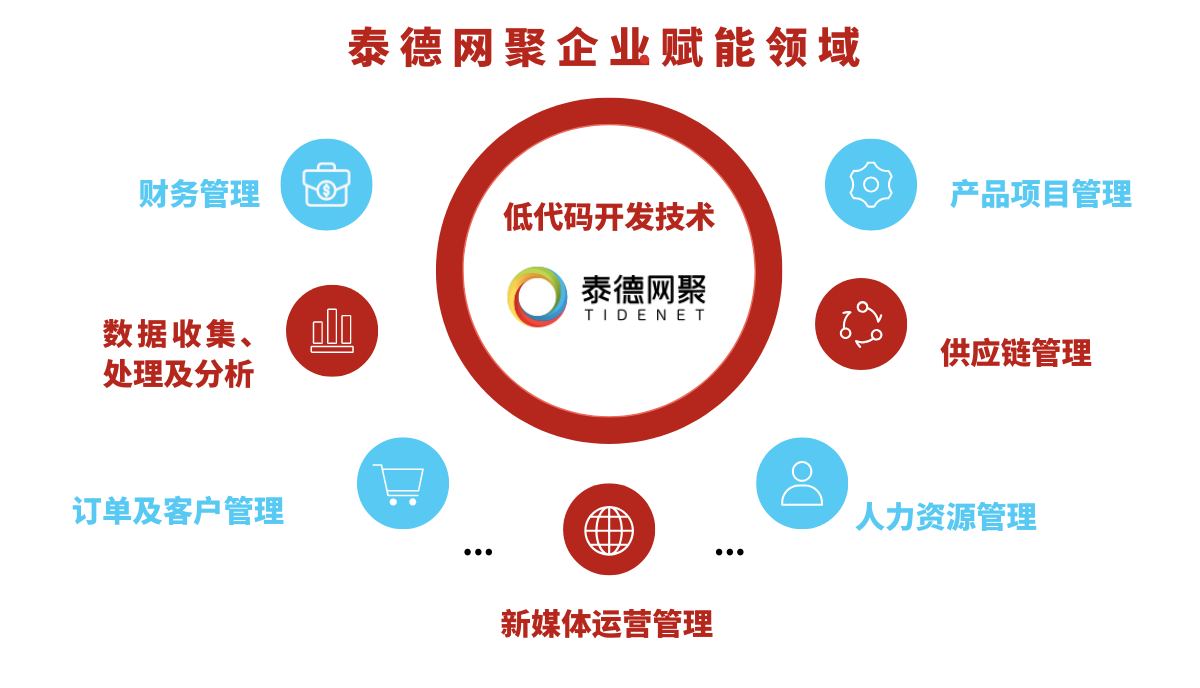
tsan.ai has launched a series of mature digital products for every department of a business, efficiently supporting financial management, market data processing and analysis, supply chain management, unified new media operations and more.
Building on the tsanCenter low-code development platform, tsan.ai has created mature solutions, software and cloud services for many fields, including media, culture and tourism, sports, digital villages and the industrial internet. It will keep close to the digital needs of every industry, refine its application scenarios, solve the problems of traditional models more efficiently, and use innovative thinking and excellent technology to help every industry seize the opportunities of digital transformation and achieve new breakthroughs.