As the digital age advances, digital education is becoming a key part of modern education. To advance digital development in education, tsan.ai has developed a series of digital education solutions covering many areas, including practical training, regional public service platforms for educational resources, ideological and political education resource platforms, campus public opinion monitoring platforms, and PE exam and youth competition systems. Their core aim is to serve schools, raise the level of digital education together, and give students a high-quality digital learning experience.
1. Regional education resource platforms: making efficient use of educational resources
Since the 12th Five-Year Plan, a public service system for digital educational resources has begun to take shape, but low levels of sharing, incomplete service mechanisms and inadequate support for teaching remain common and urgently need solving. With educational resources unevenly distributed, a regional education resource platform can go a long way toward making full, efficient use of limited educational resources. As a professional digital solutions provider, tsan.ai has launched a regional education resource platform solution. It can collect and share, through the platform, the resources of schools, institutions, leading teachers and scholars — lesson plans, courseware, teaching videos, learning tools and more — integrating teaching resources and delivering them as needed to institutions, teachers, students and parents, maximizing their use and making them sustainable.
tsan.ai's regional education resource platform brings together a set of digital tools — online interactive classrooms, self-service courseware creation, teaching resource integration and more — supporting the online management, distribution and use of quality educational resources and making their operation transparent and efficient. Big-data analysis and mining of each region's needs let the platform provide personalized services, helping institutions and students quickly find the best-matched resources. It also includes home–school communication and teacher–student interaction sections, so people in different roles can communicate conveniently online, and multimedia resources make Q&A sessions, parent meetings and more lively and efficient.
Case study: Peixian Education Cloud
The regional education resource platform is an important part of tsan.ai's Peixian Education Cloud project and has been a valuable help in building out Peixian County's education data resources. Through unified management and services, it has helped complete and standardize the county's catalogue of educational data resources, making it easy to match and share resources efficiently with the needs of people in different roles. The project provides an efficient digital education service platform for fair education, helping schools, institutions and teachers deliver education better and develop the education system by promoting a balanced distribution of resources.
2. Upgrading practical education in universities: a practical training system
With the rapid development of modern technology, universities are putting ever more emphasis on students' innovative and practical skills. Practical training systems have emerged in response: through systematic professional practice, learners can try applying their theoretical knowledge to real production and development work. tsan.ai's digital practical training solution combines VR panoramas, AI, converged media and low-code to upgrade traditional teaching and fully digitalize practical training, providing more complete, mature and advanced training systems for media, software, digital and computing programmes.
Media training: The converged media training system simulates the full workflow, from production and creation to material processing, content publishing and promotion. By fully simulating the workflows and operating scenarios of the media industry, it gives students highly practical skills training. Through the training, students gain the hands-on skills they will need at work and a deeper understanding of how the modern media industry works.
Software training: In addition to basic functions such as course learning, task assignment, multi-OS simulation, logs and grades, the training system for software, digital and computing programmes adds tsan.ai's core technology — low-code training modules and an AI training platform — where students can learn and extend AI algorithms and models, study frontier technologies used in industry today and strengthen their ability to innovate. Students gain practical work experience during training, and teachers can assess students' real abilities and teaching outcomes directly. The system helps universities build a unified, sustainable practical teaching system and supports reform of teaching methods and talent development.
VR panorama training: tsan.ai's digital training solution integrates VR panorama training, upgrading traditional teaching across disciplines and helping universities build practical courses for many programmes and improve teaching outcomes. With VR panoramas, for example, geology students can observe volcanic eruptions and tsunamis as if they were there — scenes that traditional teaching could show only in pictures and video — greatly enriching their learning experience and results.
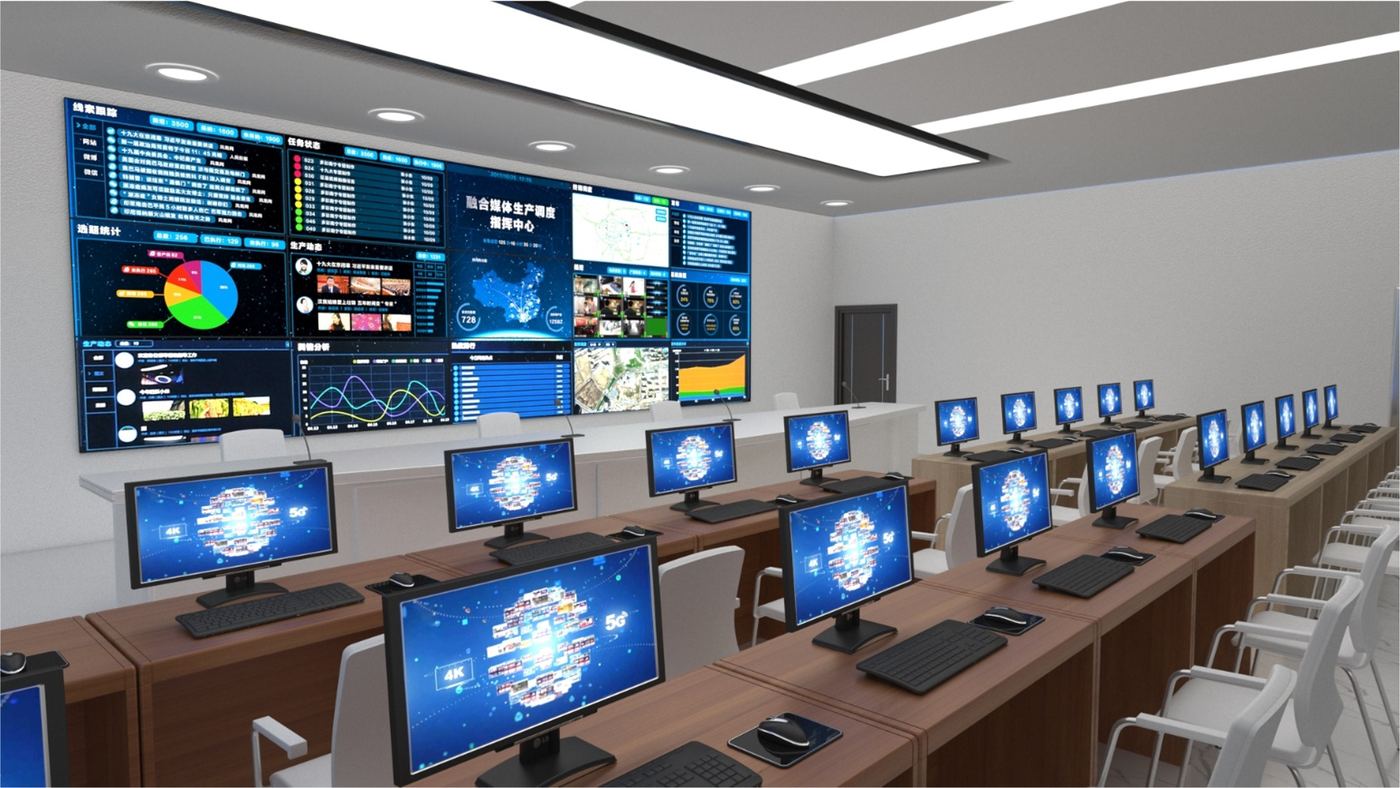
Figure: The digital practical training system in use
Case study: The converged media lab at Anhui University's Jianghuai College
With its own smart media platform at the core and drawing on the college's advanced equipment, tsan.ai built a new converged media teaching lab for Jianghuai College that combines theory with practice. Through systematic professional practice, students run full-workflow simulations in a virtual environment and gain a deep understanding of how the media industry works. They take part in production and creation, material processing, content publishing and promotion, using the converged media platform for mobile newsgathering, fast video editing and story editing and publishing, and publishing quality content through the college's existing new media platforms. Teachers' teaching methods and results have improved markedly, and the system's assessment and feedback functions let them evaluate students' abilities and teaching outcomes directly and give personalized guidance. The project is a model of deep media convergence in education, overcomes the difficulties facing traditional campus media and advances the convergence of traditional and new media in universities. Training systems for computing, software and other programmes will follow, raising the overall quality of education at the university.
3. A resource platform for ideological and political education
To bring digital capabilities into ideological and political teaching and raise the quality of education, tsan.ai designed, developed and delivered a resource platform for curriculum-based ideological and political education: a comprehensive information resource platform that gathers all kinds of resources, publishes policy news and key information, and lets teachers present and exchange their work, providing teachers and students with related resources, information and services. A unified resource portal allocates and uses resources efficiently, and practical tools — personal workbenches, an intelligent workflow engine, speech recognition, text recognition, content production and user management — meet the needs of users and administrators in different roles and scenarios and make study and work more efficient. The platform provides strong support for this education in universities, raises teaching quality and brings thinking and practice on national strategy, national rejuvenation and economic and social development into higher education.
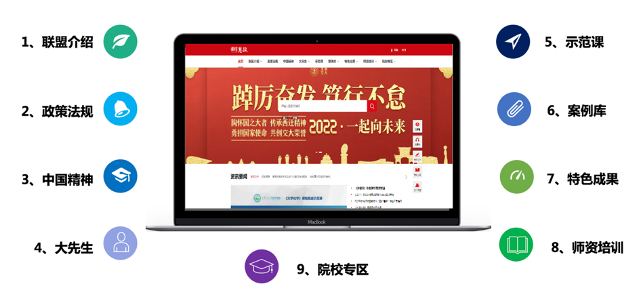
Figure: Content sections of the resource platform
Case study: Xi'an Jiaotong University's "Grand Ideological and Political Education" cloud platform
In 2023, the cloud platform tsan.ai built for Xi'an Jiaotong University was officially put into use. Drawing on the university's academic strengths and combining modern IT with big data, cloud computing and AI, it provides an integrated intelligent service. By gathering quality resources from universities and building a mechanism for sharing them, it creates a comprehensive information resource platform that shares quality resources across regions, levels and types of institution, keeps national policy news up to date and supports teachers in presenting and exchanging their work.
4. Student PE exam and competition systems: digitalizing campus sport
With the country paying ever more attention to well-rounded education for young people, and with the pandemic over, schools at every level urgently want to digitalize physical education, especially PE exams and sports competitions. Digital services throughout the process make exams and competitions fairer, and the data they generate can further support students' sporting development. tsan.ai has kept investing in R&D for student PE exams and competitions, overcoming the technical difficulties of many events and many scenarios. Using its low-code development platform and multimodal AI, it has built multi-model scenarios covering everything from registration to timing and scoring. The campus sports solution provides full services for the PE exam and competition market and can be applied to campus exams and competitions for efficient execution and management.
Based on the characteristics of the events industry and the use of internet technology in running events, the system draws on cloud computing, big data, AI and other advanced technologies and integrates multiple event management modules, connecting the whole chain before, during and after events. It provides a one-stop solution for collaborative management, statistics, information publishing and marketing across the event lifecycle, largely solving the low efficiency, high costs and scattered data of traditional events. Its convenience, low cost and ease of use as a cloud service let it strengthen traditional school sport, make campus competitions routine and standardize how they are managed.
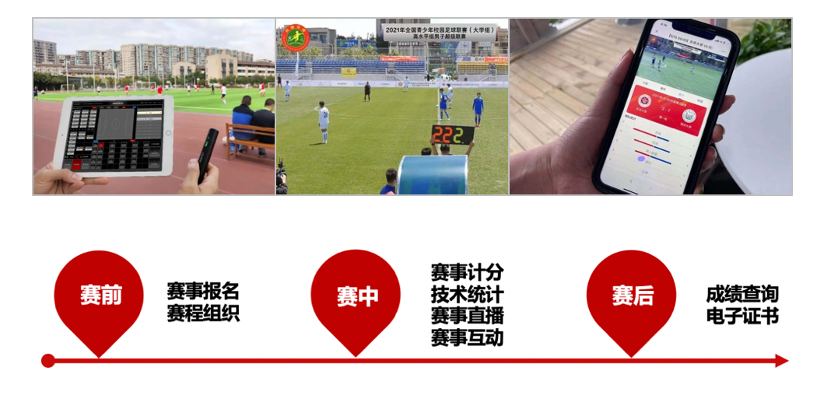
Figure: The business process of the events cloud service platform
The service platform includes a competition management system, a competition statistics system, the Jing Data fitness assessment system and a live video system. Its strong data collection, visualization and processing help campus event organizers manage information on large numbers of participants and process the huge volumes of data from large events, and generate systematic data reports, helping organizers understand and control the overall running of events and upgrade how campus competitions are managed.
The platform also serves campus PE assessments, with online registration, group management, results lookup and certificate printing. It supports multi-dimensional analysis — by test item, across grades, by gender and more — and provides visual reports that give teachers a clearer, richer view of students' physical literacy and where they are held back, raising the quality of PE and young people's all-round fitness.
Case study: The Jing Sports event service platform
tsan.ai and Jing Sports jointly built an innovative "sports platform" solution for student sport — the Jing Sports event service platform. It brings together a national database of student athletes, coaches, referees and university sports staff, managing registration, certification, event organization and operations for everyone in student sport in one place. This new platform for student sport offers students and sports professionals more opportunities and resources. It provides full event services — organization, statistics, assessment and live video — making events more efficient and fairer and lowering their cost, supporting schools' PE systems and improving young people's fitness. The Jing Sports app developed as part of the solution connects school accounts and offers campus sports news, live events, training courses and more, opening a new channel for promoting campus competitions and developing sports culture and fitness, and creating a new "converged media plus sport" model. Together, tsan.ai and Jing Sports are bringing these event services to universities across China to build a distinctive, vibrant campus sports community.
5. Campus public opinion monitoring: building a harmonious campus
The campus public opinion monitoring platform is based on big-data analysis and natural language processing. It offers a trending-topic aggregation and analysis service and a WeChat group management and monitoring service. The trending-topic service collects the rankings of major trending websites and shows them on a large screen, and supports configurable monitoring plans that gather opinion information accordingly. The WeChat group service closes the blind spots of traditional oversight and moves monitoring upstream, so issues are caught early. Combining group messaging, real-time chat monitoring and keyword analysis with data visualization and community content management, it lets administrators use Juwei to distribute information, deploy publicity resources and carry out other management and monitoring, for efficient community operations, information gathering and analysis.
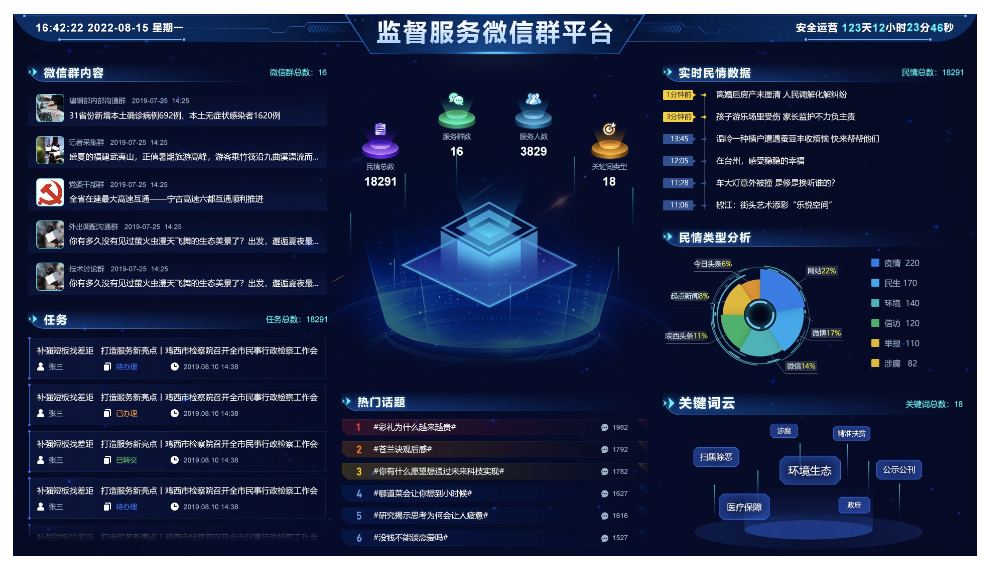
Figure: Large-screen data display of the WeChat monitoring service
The platform provides comprehensive, efficient public opinion monitoring for campus management, enabling precise control of how information flows on campus. Administrators can follow opinion trends closely and take timely, effective action to keep the campus stable and harmonious, while strengthening communication with teachers, students, parents and the public and keeping information flowing promptly and effectively.
Digital education is an important part of building a Digital China. tsan.ai is responding actively to the national digital strategy: combining its low-code and AI capabilities with its business experience, it has launched digital education solutions suited to many education scenarios, bringing more convenient and efficient ways to teach and learn. As technology keeps advancing, digital education will mature, and tsan.ai will keep innovating and strengthening its capabilities to provide quality, practical digital services.